
A Shabbat critwink from the Intelligent Showmosexual
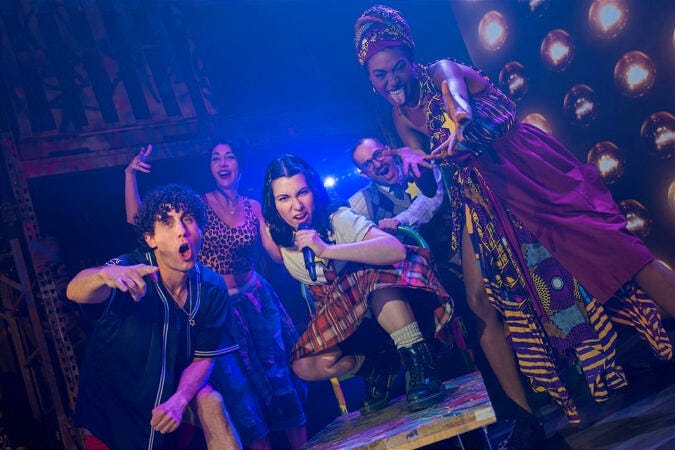
Somewhere around the 80% mark of Slam Frank, I had an epiphany.
Up until that point, as audience members around me howled with laughter, I only occasionally guffawed, which made me worry: Was I taking myself too seriously? Was solid musical theatre craftsmanship being lost on me because I was being overly sensitive? Overly sensitive as (a) a Jew; (b) a theatre person; (c) someone who spent years working in diversity, equity, and inclusion; or (d) all of the above.
Then, it hit me. It’s not that I was being excessively precious or self-righteous. I wasn’t laughing because neither the material nor the production is very good.
The concept is fertile enough to sound like the promised land for fans of transgressive comedy (a category in which I would, despite any seeming sanctimoniousness, place myself). Most of what we watch is a show-within-a-show—a production of The Diary of Anne Frank that has been “translated and transgendered” by “a highly-respected and forward-thinking regional theater company” into a performatively PC, effortfully inclusive, Hamilton-style hip-hop musical. Slam Frank aspires to the so-unbelievably-offensive-it’s-hilarious aesthetic of The Book of Mormon and The Producers, but it too frequently mistakes shock value for wit. It’s as audacious as its stylistic antecedents. It’s just nowhere near as funny or even as intelligibly told.
Another reference point seems to be Waiting for Guffman in the ways the musical pokes fun at theatre people. Whether targeting show folk, politics, or questions of identity, the humor doesn’t only feel reductive; at a certain point, it starts to feel redundant. Composer/lyricist Andrew Fox and librettist Joel Sinensky keep making the same jokes, and director Sam LaFrage has not guided the actors to play their performances at different levels. As a result, the cast often resembles the ensemble of a Fringe Festival show, gamely committing to material that’s not as developed as their talents.
LaFrage’s most amusing touches come when he leans into what I can only describe as a queer brand of stupidity, the same sensibility that made Titanique sail—flourishes like the choice of who’s included (and especially who’s included repeatedly) in a montage of strong women, or the pink-and-blue parasol that literally opens on the set’s second level as a character sings about their non-binary gender falling under the trans umbrella. Of the three creators, though, Fox comes off best. His lyrics include a disappointing number of near rhymes, but also some strikingly adroit turns of phrase, as when Anne’s religious sister sings, “You can bask in the light of your people/’cause they’re the ones who know who you are./Just let yourself be separate and equal/and you can turn that yellow patch into a shining blue star.”
Slam Frank also suffers from a brief yet extreme third-quarter shift into something like seriousness. The tonal whiplash totally sucks the ridiculousness that previously defined the musical out of the room. No one howled with laughter again. Presumably, Fox, Sinensky, and LaFrage are trying to subvert expectations and destabilize their audience, which I suppose they do. However, it’s a turn the show never recovers from, especially when it tries to skip back into silliness in its last quarter. Whatever point they’re trying to make or get us to discuss is so garbled, all that’s clear is they want us discussing…their show.
the not-a-bottom line
🌈½ (out of five)