
Today, like a gay high schooler who’s hoping they can change their fate by gently canoodling with someone of the opposite sex, I’m experimenting.
Specifically, I’m going to play with a new format: multiple capsule reviews of ~300 words for productions that I saw in the last few months and did not attend in my capacity as a Drama Desk voter, even though, in some cases, their runs have concluded. (I typically don’t post about anything that readers won’t have a chance to see.) Let me know what you think of this structure in the comments below or by DM!
An American Daughter
Running through September 20
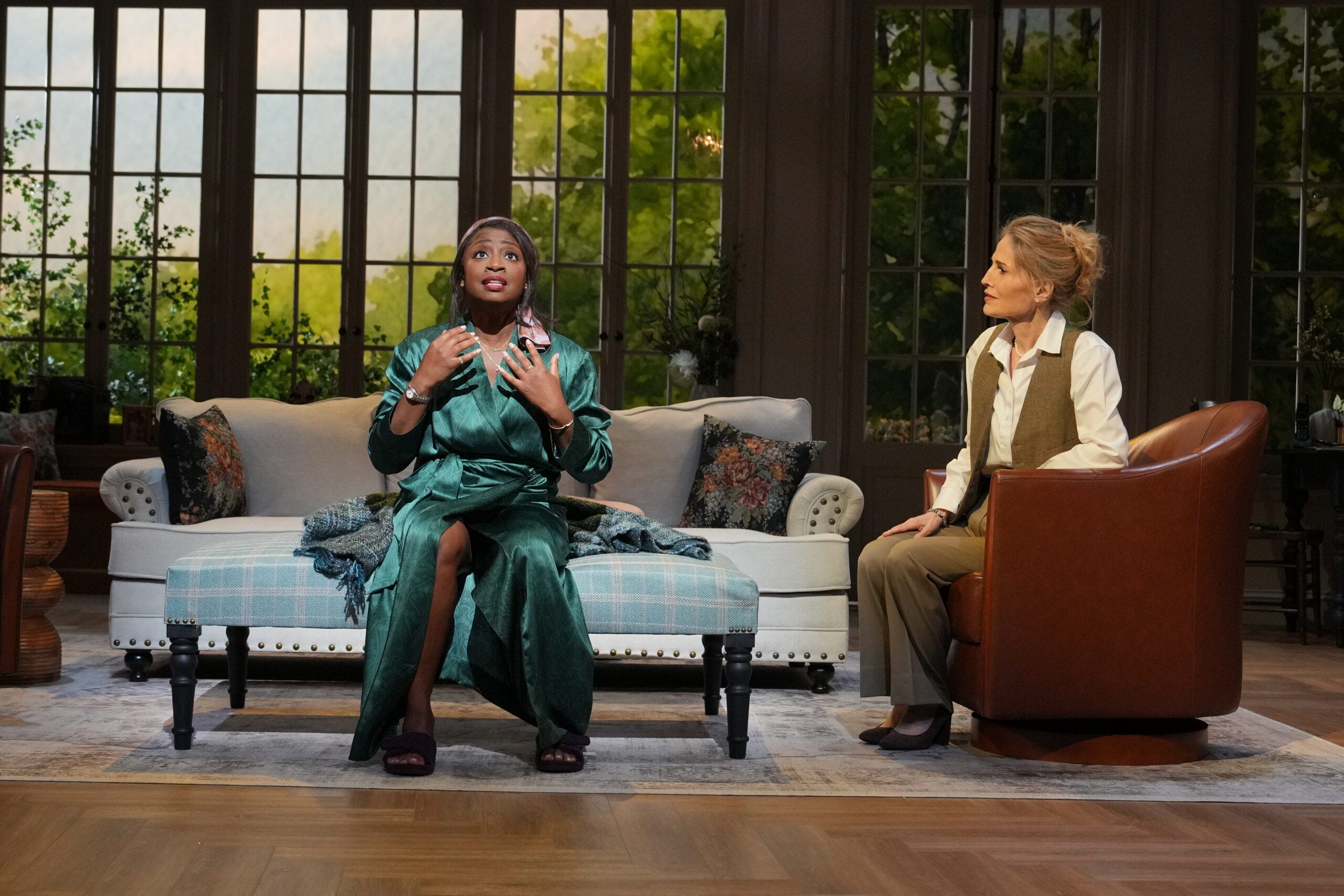
In 2006, Wendy Wasserstein’s career was cut tragically short when she died of lymphoma at the age of 55. Although she left behind several well-known plays—most notably The Heidi Chronicles, which won her a Tony, Drama Desk, and Pulitzer—it’s hard not to wonder about the work that Father Time stole from Wasserstein and her audience. Her writing centered women, explored their relationships to feminism and current events, and grappled with Jewish identity.
An American Daughter includes all those trademarks but has emerged as a fascinating problem play in Wasserstein’s catalog. It can be astute and very funny, features a handful of memorable characters, and serves as both a time capsule of the mid-1990s political landscape and bleak foreshadowing of political strife to come. And yet it is also predictable, overlong, and sometimes illogical in its plotting.
With its pedestrian direction by Sarna Lapine, La Femme Theatre Productions’ off-Broadway revival Frankensteins together multiple versions of the script, exacerbating most of those problems, particularly the jarring narrative turns. The cast boasts several of theatre’s best journeymen actors doing characteristically engaging work, such as Robert Sean Leonard, Mary Beth Piel, Ryan Spahn, and especially Dakin Matthews. Unfortunately, there are two significant liabilities the production cannot overcome. Montego Glover makes a valiant effort to branch out from musical theatre but ultimately does not have the depth or comic timing to pull off the juicy role for which the equally gone-too-soon Lynne Thigpen won a Tony. (Please note: it’s still not as juicy of a role as the Chief in Where in the World Is Carmen Sandiego?). Even more damagingly, La Femme founder/executive director Jean Lichty has cast herself as the protagonist. Lichty is a human vacuum, sucking the energy out of the production whenever she speaks. There may be a way to reinvigorate An American Daughter, but without a stronger pair of actresses in its two most important roles, Wasserstein’s play remains a problem.
the not-a-bottom line
🌈🌈 (out of five)
Joe Turner’s Come and Gone
Closed July 26
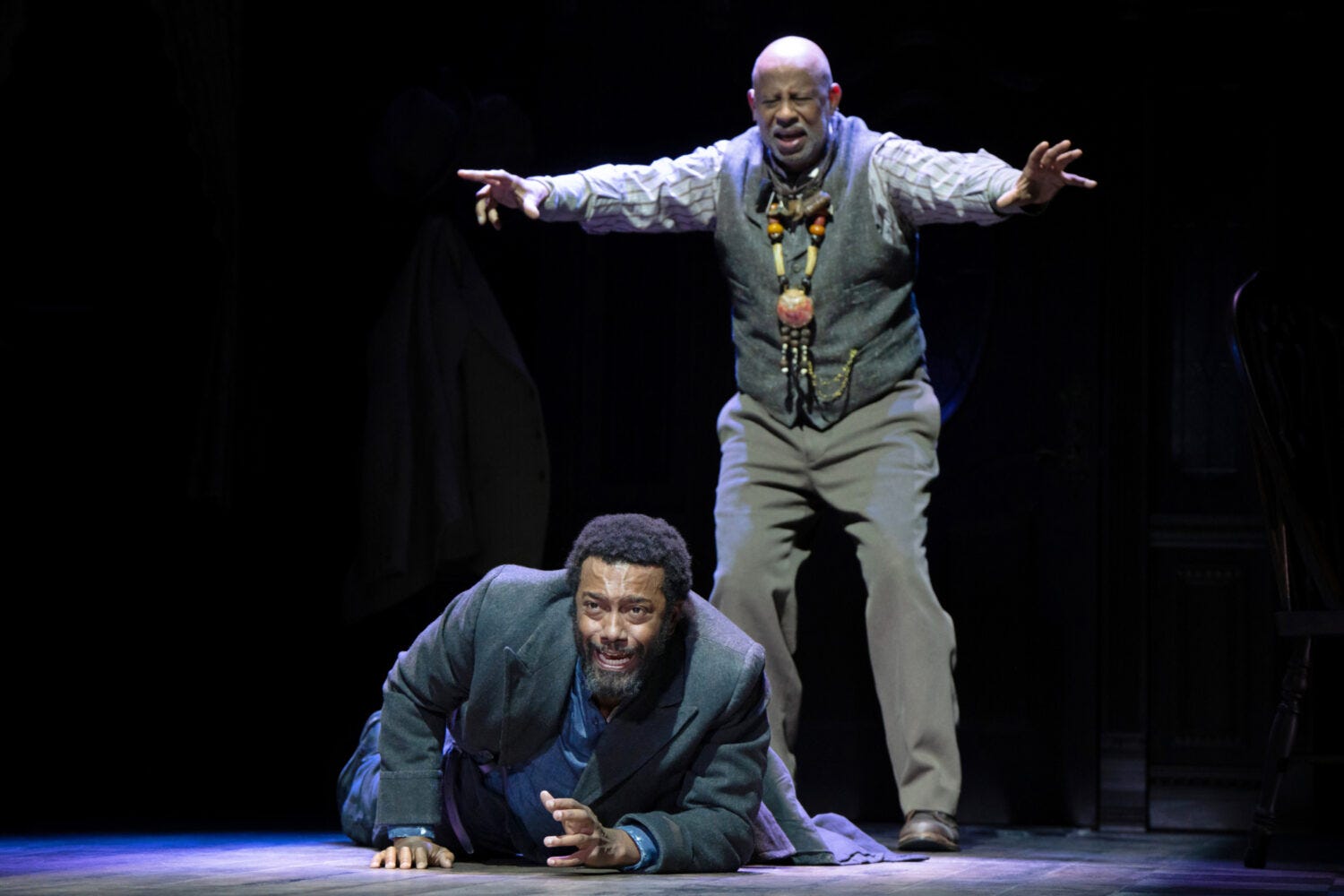
I’m embarrassed to admit that I had not seen or read Joe Turner’s Come and Gone, the second play in August Wilson’s Century Cycle, before attending Debbie Allen’s recent Broadway revival. Without knowing the play, I assumed it was a showcase for Taraji P. Henson and Cedric the Entertainer, who were heavily promoted as the production’s stars. In reality, it’s more of an ensemble piece concerning a Pittsburgh boardinghouse that is disrupted by the arrival of a haunted drifter named Herald Loomis (Joshua Boone).
In a captivating Broadway debut, Henson seemed so fully at home onstage, I found myself wondering how her talents could be applied to juicier roles in Wilson’s canon, like Ma Rainey or Mame Wilks. Despite some issues with projection and articulation, Cedric the Entertainer’s performance showed off not just excellent comic timing (as expected), but also a beautiful sense of groundedness and gravitas. The problem is that it’s Loomis who’s the central force around whom the drama revolves…and Boone’s performance was not dynamic enough to hang a revival on. Which left me wondering: why revive Joe Turner’s Come and Gone if you don’t have a Loomis?
The evening had its intermittent pleasures—a sweet scene about young love, the late appearance of a character played with intense emotion by Abigail Onwunali—but only when the thrilling Ruben Santiago-Hudson (a longtime Wilson expert) took center stage as the local “conjuring man” did it really start to crackle. Given Allen’s many successes as a choreographer, the clumsiness of the production’s physical staging was also surprising. Few directors have had Allen’s experience moving bodies through space, yet the blocking felt strangely reserved, often using only half of David Gallo’s homey set. Wilson’s play bursts with mystery, but this revival was puzzling for all the wrong reasons.
the not-a-bottom line
🌈🌈½ (out of five)
Rosie O’Donnell: Common Knowledge
Closed August 8
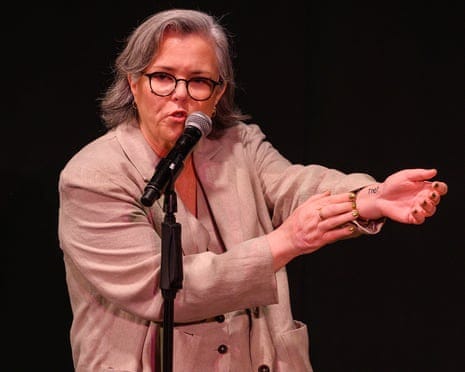
I’m of the generation that grew up on Rosie O’Donnell’s now legendary daytime talk show. For a young showmosexual in suburbia, it provided a vital connection to live theatre, a New York sensibility, and, although she was not yet officially out, queerness. I’d already been a huge fan of O’Donnell’s—and I’m not talking since A League of Their Own or Sleepless in Seattle; I’m talking since Gimme a Break! (“I’m a dental hygienist, I know these things”), VH1 Stand-Up Spotlight, and the short-lived sitcom Stand by Your Man (opposite her-generation’s-Lucille-Ball Melissa Gilbert). And, of course, I was there when she made her Broadway debut as Rizzo in Grease!
When I heard Common Knowledge, the one-woman show she’d workshopped abroad, would play off-Broadway, there was no doubt in my mind I had to go. However, having intentionally avoided press about it, I wasn’t sure what to expect. Would it be, like her fabulous HBO special from 1995, a stand-up routine? The sort of political commentary associated with her since her time on The View, particularly in relation to one aspiring authoritarian? Confessional soul-baring like much of her writing? Or a foray into the more dramatic acting that she’s done in recent years?

It turned out to be all of the above. While the script could better weave together its various strands, especially in its conclusion, it was undeniably satisfying to get a piece of every version of O’Donnell the audience might want. The show focuses on the joys of raising a child with autism and O’Donnell’s healing relocation to Ireland, but every story is infused with the unique blend of candor, vulnerability, and, of course, humor that has endeared her to fans for decades. If Common Knowledge has another life—and it should—it will be interesting to see how it evolves: much of the lighter material was repurposed for monologues during O’Donnell’s recent stint guest-hosting Jimmy Kimmel Live! Even if she reuses it, well, there are worse things she could do.
the not-a-bottom line
🌈🌈🌈½ (out of five)
This seems like a perfect format for sharing your thoughts on shows that have closed, particularly for productions that don’t warrant a detailed review. You always have opinions I value hearing, and this is a good way of sharing those while acknowledging that in some cases … less is more.