
If you care enough about live theatre to read this Substack, my guess is you've already heard one or both of the common reactions to director-playwright Kip Williams's one-person adaptation of Oscar Wilde's The Picture of Dorian Gray: (1) the production's use of video, a mixture of live feed and prerecorded segments, is a technological marvel; and (2) Sarah Snook gives a tour-de-force performance as over two dozen characters.
For the most part, I found each of these statements to be true. For the most part.
While I expected a certain degree of irreverence, the sort of sly knowingness that runs as an undercurrent through a good production of Wilde's The Importance of Being Earnest, I wasn't prepared for how broad Snook's performance would be. Much of what she does ends up feeling more like The Importance of Being The Klumps. Don't get me wrong—she clearly differentiates each character, and the piece provides a compelling argument for her range (not to mention stamina) as an actress; it just has a sillier, more exaggerated tone than I imagined it would.
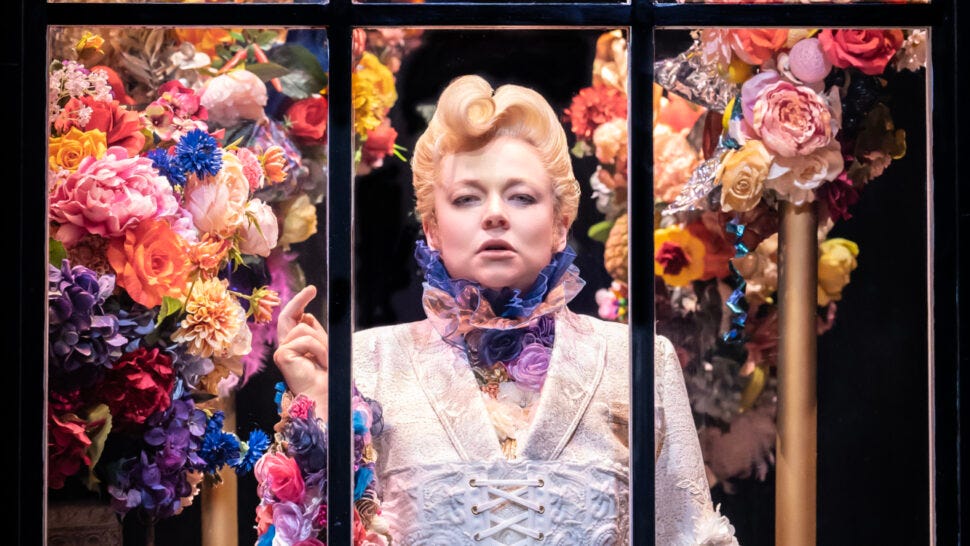
The production's elegant and extensive use of various types of video is also a considerable feat. However, it so dominates the piece that, at some point, I found myself wondering: is this actually theatre? or is it really bougie performance art? is it some new hybrid form? Admittedly, my friend "Zeke" raised these questions when sharing his experience with me before I saw the play, so I didn’t exactly go in with a clean slate. To be clear, though, I also did not leave thinking I could comfortably label it one thing or another. Regardless, as with the size of Snook's performance, there isn't necessarily anything wrong with this Dorian Gray not fitting neatly into a categorization of traditional theatre; it's just different than what one expects when heading into a Broadway show.
Which could be a good thing. Could be.
My reservations about this production relate more fundamentally to its very existence, both as a star vehicle for Snook and a literary adaptation. The Picture of Dorian Gray is inarguably one of the most important works of fiction to and about queer men, and of course its author is one of history's most significant queer male writers. Transforming Dorian's tale into a one-person show starring a cisgendered straight woman feels like an act of erasure. In fact, I know multiple intelligent theatergoers who saw the production and didn't read Dorian—the character or the larger narrative—as queer in any way.
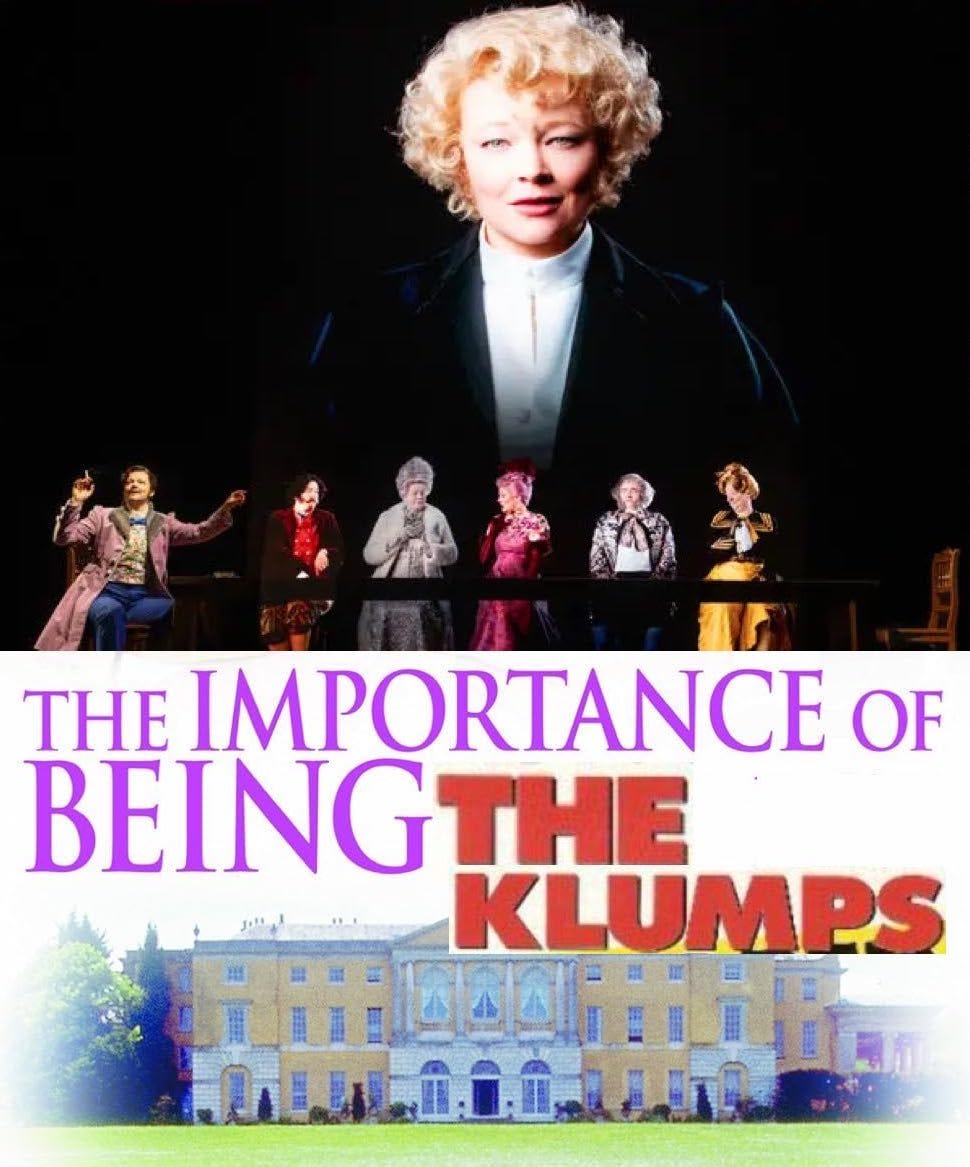
Beyond casting, Williams further decentralizes queerness by prominently featuring the character of James Vane, the avenging brother of a woman spurned by Dorian, even though he does not even appear in Wilde's original novella. James's inclusion here serves to emphasize Dorian's role in an opposite-sex romance. Furthermore, it reveals Williams's reliance on the 1891 full-length novel, which has long been interpreted as intentionally obscuring the original story's queer elements (so much so that it became a point of discussion in Wilde's trial for gross indecency).
It seems that Williams and Snook are, at least in part, using Dorian Gray to comment on the cruel and unrealistic standards society imposes on women when it comes to youth and beauty. They most persuasively make their point in an amusing sequence using filters on an iPhone…but that's…like…five minutes. In the rest of the two hours, they fail to make a convincing case as to why they're telling this specific story in this way at this time with this performer.
In my undergraduate musical theatre program, a friend of mine used to joke that it was her goal to be able to belt the "Queen of the Night" aria, which is funny because it’s written in such a high soprano range that belting it would be impossible. (Jokes are always funnier if you explain them.) At one point, a classmate suggested that she could transpose the aria down to a key where it could be belted—but at that point, why bother? Listeners seek out the "Queen of the Night" aria to hear those high notes. If you are not going to hit C6, choose a different piece of music; there's a wealth of material that will more naturally allow you to showcase your E5.
Watching this production of The Picture of Dorian Gray felt like hearing someone belt the "Queen of the Night" aria after transposing it down a ninth: the achievement is admirable, but the choice of material does not seem logical or justified. Wilde's classic novel feels borderline incidental, like an excuse to deploy virtuosic acting and technology rather than a landscape that acting and technology explore. Williams and Snook's work here is unquestionably, as my friend Rick said, "impressive," but the lack of a meaningful connection to the underlying text prevents it from becoming especially thought-provoking, moving, and/or hilarious—qualities essential to theatre. So maybe I can comfortably categorize this Dorian Gray after all.
the not-a-bottom line
🌈🌈½ (out of five)
a guide to ticket-buying
I got a $44 rush ticket using Telecharge Rush one hour before curtain on a Saturday night and was seated in Orch L8.
Interestingly, I tried getting a rush seat right when they went on sale in the morning, but was immediately told they were sold out. The site's advisory to check back later in the day in case more rush tickets became available proved useful.
Given the large projection screens, you don't want to be in the front of the orchestra for this production, though sitting closer to center than I did would be preferable.
To paraphrase Oscar Wilde: "An optimist will tell you the glass is half-full; the pessimist, half-empty; and the intelligent showmosexual will tell you the glass is twice the size it needs to be.