
A critwink* from the Intelligent Showmosexual
*In case you missed it, critwinks are smaller reviews turned out in a single draft.
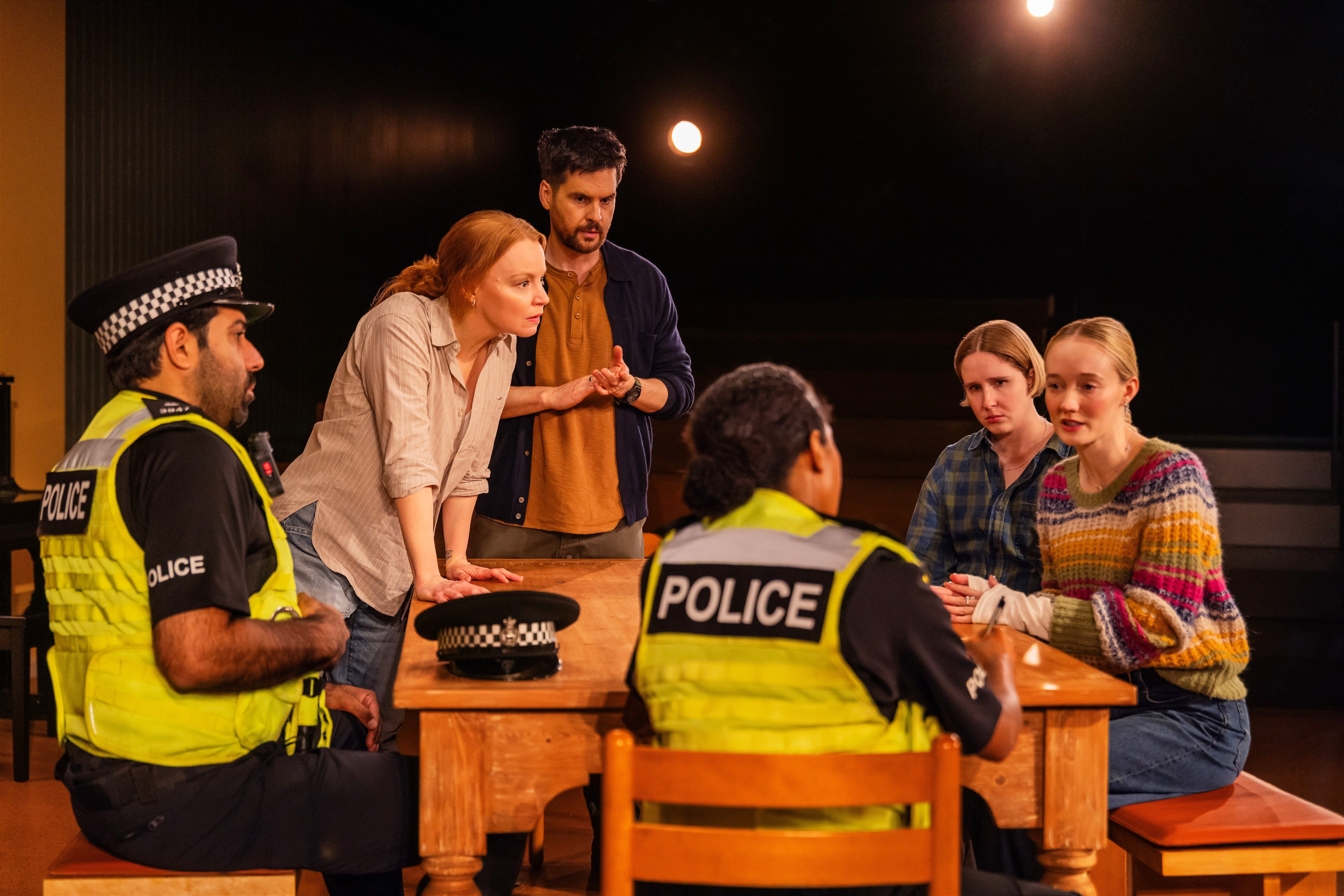
There were many moments during Manhattan Theatre Club’s US premiere of The Unbelievers, Nick Payne’s drama about a family dealing with the disappearance of a child, when I found myself thinking of shows that explore similar subject matter more effectively. David Lindsay-Abaire’s Pulitzer Prize–winning Rabbit Hole is a more gut-wrenching examination of grief. Marin Ireland’s pre-existing condition, also currently running off-Broadway, better demonstrates how living with trauma distorts time. The musical Next to Normal, another Pulitzer winner, offers a more visceral example of a child’s competition with someone who’s not there.
However, there were also moments, especially when the focus was on leading lady Lauren Ambrose, when I found myself recalling true stories that I had no idea I remembered, stories of families living through the aftermath of a loved one going missing. At the start of the play, Ambrose’s careful lighting of a candle—perhaps at a vigil, perhaps at a lamppost—reminded me of an interview in which Michel Surprenant discussed always leaving a light on in his yard to signal to his missing daughter, Julie, that he was still waiting for her. An unproductive séance brought back memories of Jacob Wetterling’s father, Jerry, describing his desperate consultations with psychics on the heartbreaking podcast In the Dark. When a police officer suggested the family should use T-shirts to generate media attention for their case, I thought of the red T-shirts Bruce and Denise Morcombe have made a symbol of child safety awareness through the foundation they created in honor of their son, Daniel, who wore such a shirt when he was last seen. These terrible tragedies came to mind not simply because of what was happening onstage, but because of how it was happening: with an honesty, immediacy, and emotional reality that felt true to what the Surprenants, the Wetterlings, and the Morcombes endured.
A production that summons such strong associations with real life is doing something right, and a production that so frequently pales in comparison to others is doing something wrong. Thus is the emotional but uneven experience of seeing The Unbelievers.
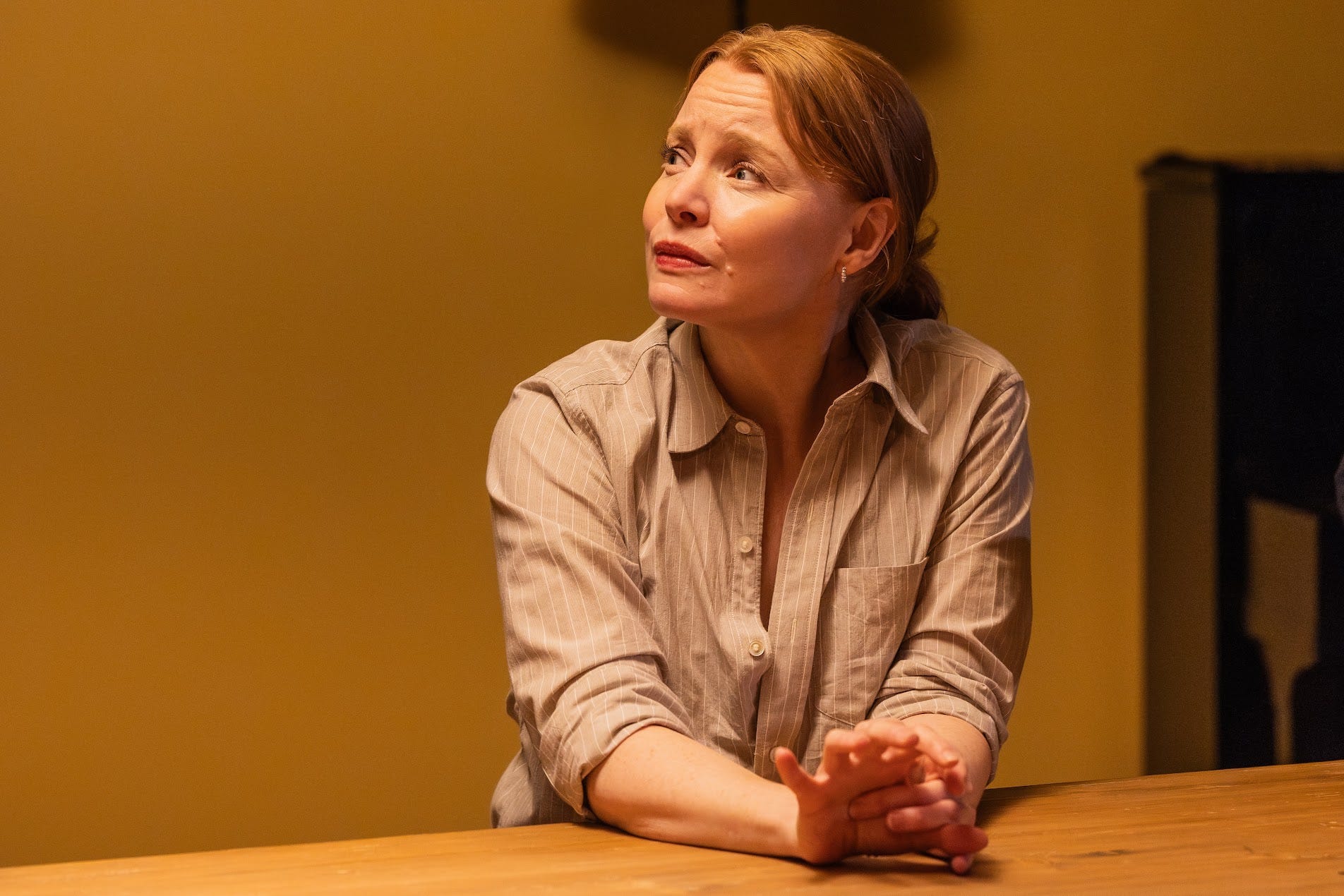
What’s rightest about the evening is Ambrose’s acutely present, emotionally raw, and occasionally very funny central performance as Miriam, the missing boy’s mother. The play’s nonlinear structure requires an actress nimble enough to bend her emotions back and forth, and Ambrose rises—or should I say twists?—to the occasion like a theatrical Gumby. The production also proves to be an excellent showcase for Nina Ross, who, like Ambrose, expertly moves (and sometimes even coexists) between intensity and delicacy. As Miriam’s firstborn, Ross also provides the evening’s greatest catharsis in a sequence that’s best left unspoiled. Though Payne’s script doesn’t call for it, director Knud Adams unwisely recycles the idea near the end of the play with diminishing returns.
It’s one of several wrongheaded decisions Adams makes. Paul Steinberg’s woefully misconceived set is a physical manifestation of the director’s approach to the material, which is at once heavy-handed and arcane. Adams’s staging and integration of design elements into a contrived monologue, which Payne likely intended as the play’s climax, are so botched that not even Ambrose can salvage it.
His work with the rest of the cast is inconsistent. A few actors play multiple roles, likely out of financial necessity rather than creative choice, and Adams doesn’t help to adequately differentiate them. Marjan Neshat, for example, is excellent as a detective, but does so little to distinguish her second part that a friend assumed she was still playing the same character. As Miriam’s daughter, Elizabeth Yeoman shares some touching moments with Ambrose, though she generally works far too hard. Playing Miriam’s ex-husband, an alcoholic turned reverend, Hadi Tabbal is too quirky and insufficiently centered to serve as the play’s emissary from the world of faith. As the missing teenager’s father, Tom Riley mostly does good work, despite indulging in my biggest acting pet peeve—pretending to cry when the tears won’t come. Please pay Viola Davis’s snot the respect of making a different choice.
Payne’s writing won’t be for everyone. He leaves many questions unanswered, seemingly by design, and quietly ends the play in medias res, striking a note of hope for familial harmony without composing a tidy resolution. Here, at least, Adams grasps the tenderness in what is said and unsaid, and he guides his cast to deliver the final scene perfectly. Messy yet moving, The Unbelievers captures the meaning behind Michel Surprenant’s light: even when our loved ones vanish into darkness, our commitment to them can keep burning bright.
the not-a-bottom line
🌈🌈🌈 (out of five)
a guide to ticket-buying
The Unbelievers runs through Nov. 29, 2026, and is 110 minutes long with no intermission.
Avoid the onstage seats, which people have told me are uncomfortable and prioritize proximity over sightlines.
The best seats are just house right of center in the first few rows.
Regularly priced tickets are available online, and rush tickets are available for $48 through TodayTix.